

What capital wants
A growth VC summited it up: “If we can’t see a path to a $20 billion company with you as the emerging winner, we can’t do it at all.”


Last week I shared an rough way to measure the relative importance of revenue, growth, and narrative in fundraising right now.
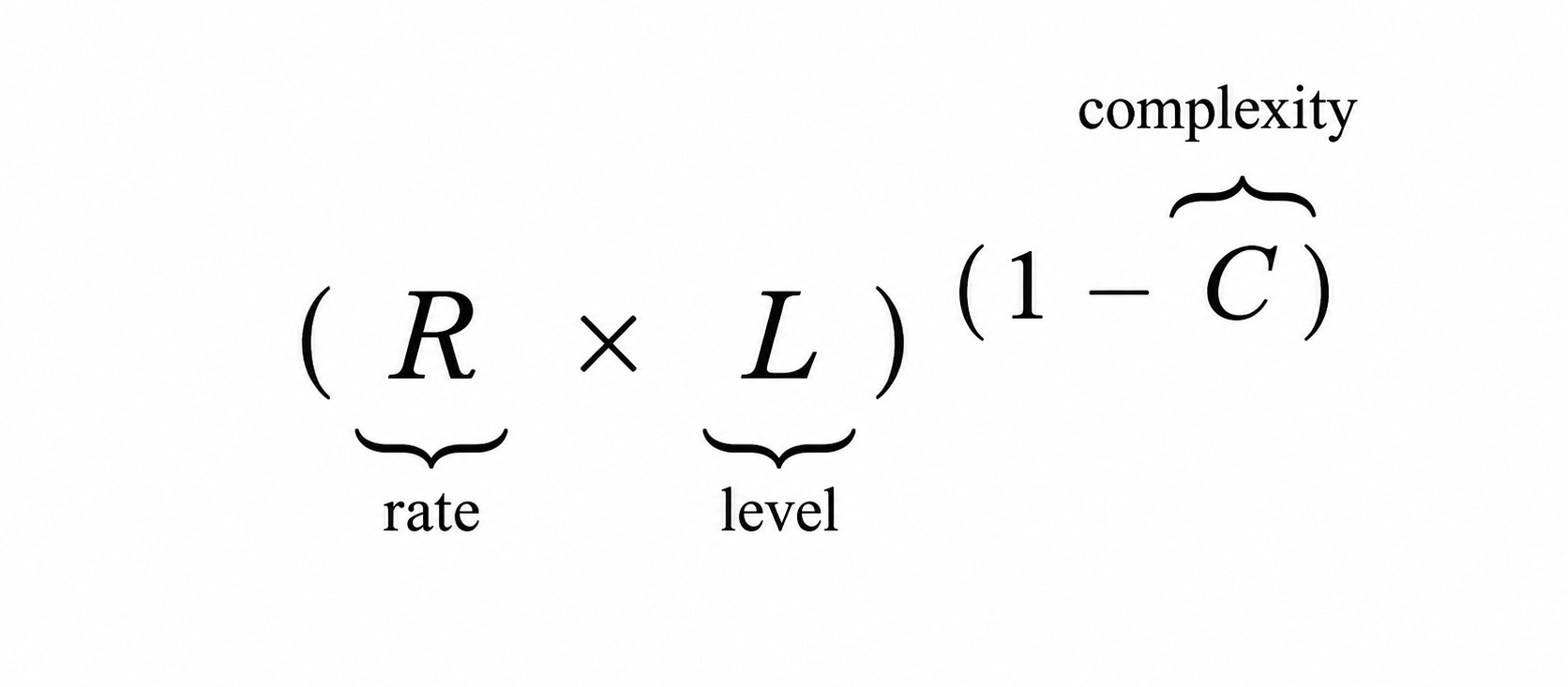
Rates (how fast) and levels (how much) each matter and can compensate for one another. If growth is 0 then great topline doesn’t mean anything. If topline is near-zero, great growth doesn’t mean much.
And the more complex your narrative and story is, the harder it is for people to pay attention to the momentum. Simple, powerful stories let great numbers shine. Complex stories are drags on the internal proof/momentum/traction you’ve created.
If that is something of an answer to/heuristic for “when should I raise,” it’s definitely not sufficient for “how do I raise” or “what do investors want.”
Right now no one knows and predicting the success of a fundraise feels often impossible.
This is basically all anyone at seed (companies and investors) are talking about right now.
It’s hard to look a founder in the face and say “no one cares about your company”. But at some level the whole market has turned into “team plus TAM” analysis.
So the gate/bar to capital is not just “high” but actually rather specific:
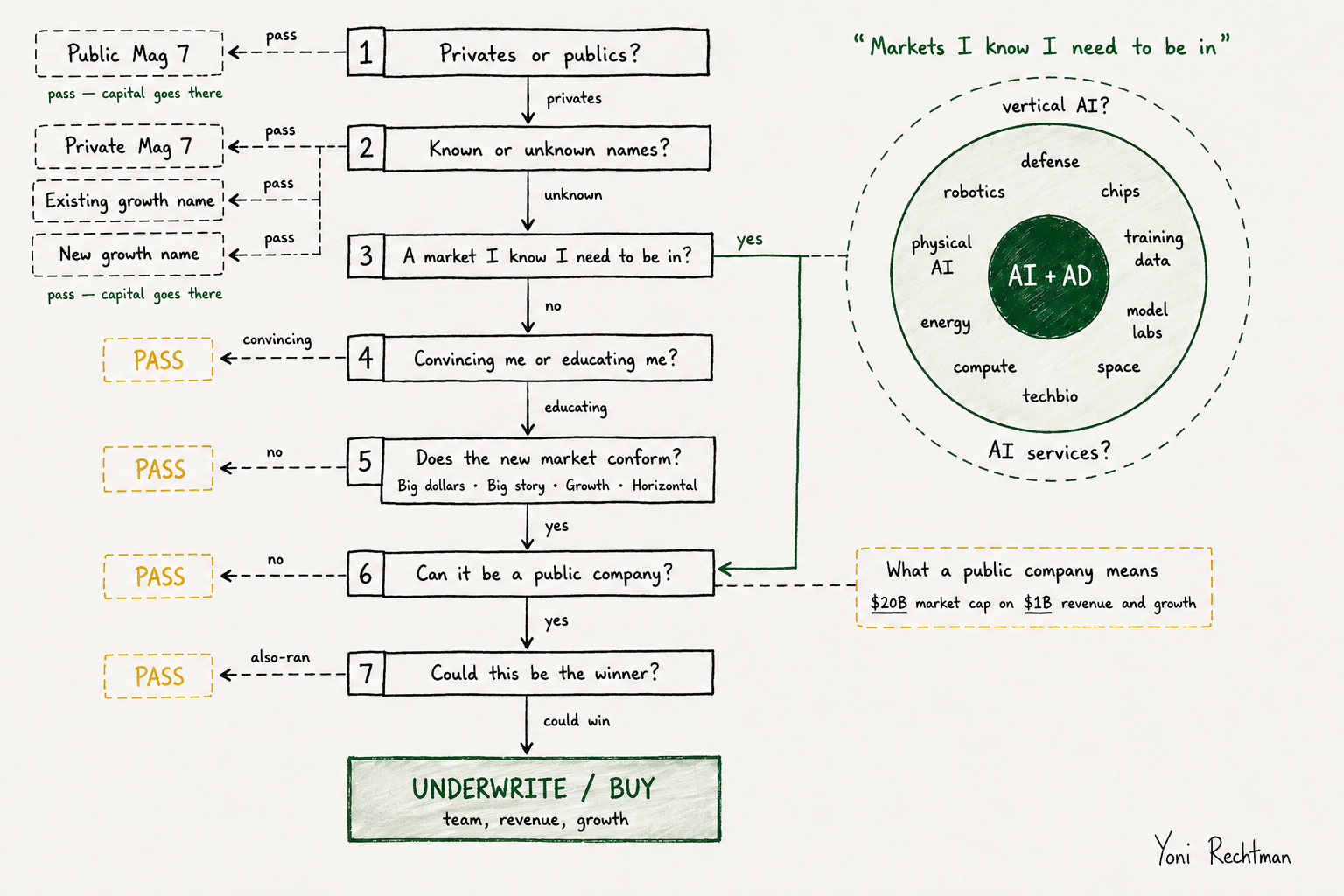
One friend who works in growth summited it up: “If we can’t see a path to a $20 billion company with you as the emerging winner, we can’t do it at all.”
Another friend simplified it further: “Is it a market I need to be in, and do you seem likely to win that market?”
You are competing for dollars with every other “tech” asset in the world, many of which are already represented within the funds you’re talking to
One of the hardest things is “educating” vs “convincing” an investor about an opportunity. Convincing almost never works, at least not in this environment. If they’ve considered it and think/know they don’t want to be in it, it ain’t gonna happen. If it’s novel to them (or novel to the world) you stand a shot.
In the past you might have said: “Well, there’s capital in my vertical, and that capital has to invest in something, so all I need to do is be the best company in my category and the people who need to invest in my category will invest in me.”
That’s no longer true. It’s increasingly common for people to abandon prior categorization or any categorization at all.
The fintech investors don’t want to be fintech investors.
The healthcare investors don’t want to be healthcare investors.
The consumer investors don’t want to be consumer investors
Everyone just wants to be in the current thing they know they need to do, whatever category it might be in.
Capital is an input, but it’s not the desired output/prime constraint to business building, at least for truly idiosyncratic, asymmetrically risky startups
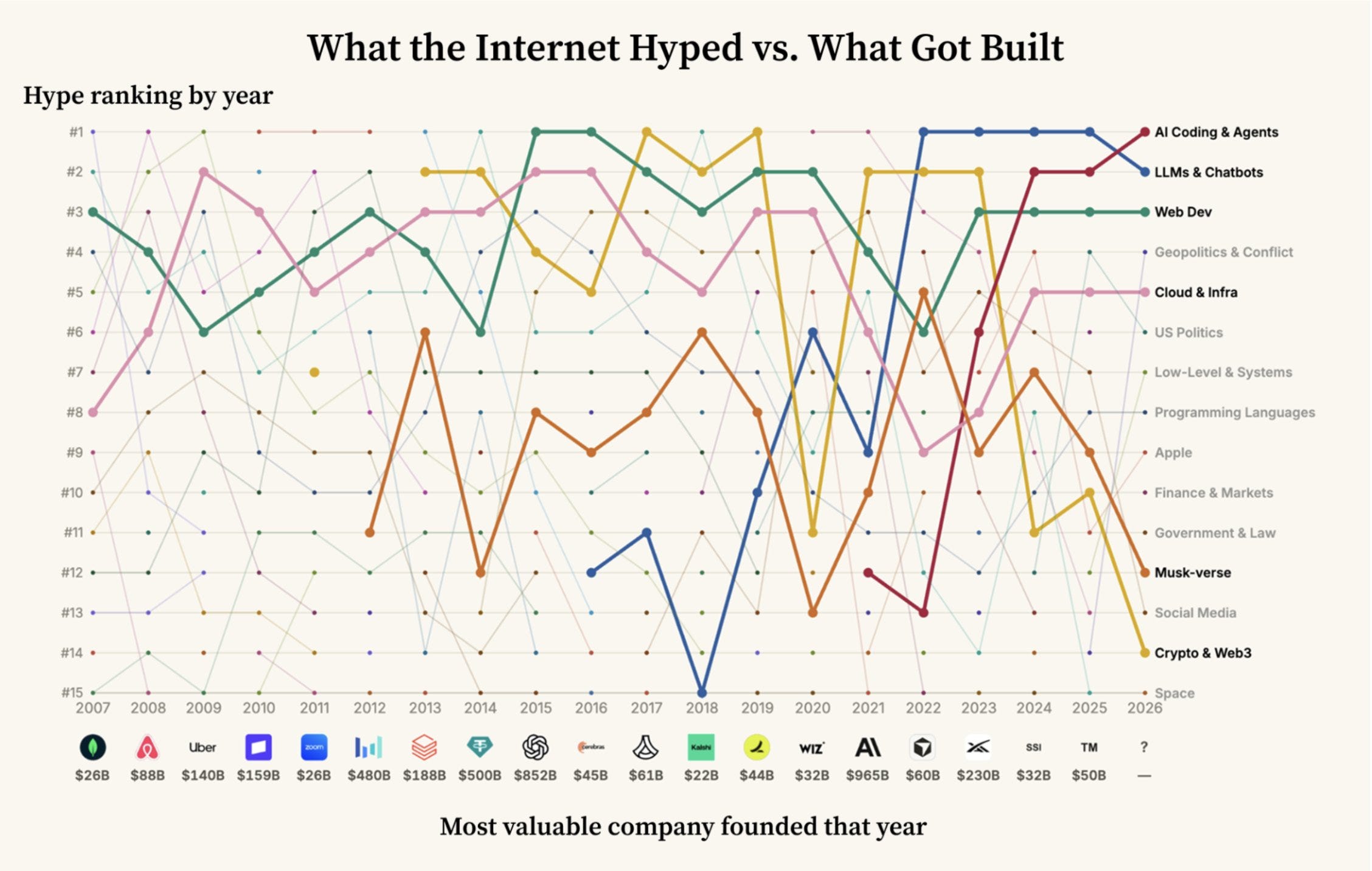
This kind of chart is obviously a little silly given the people who frequently post them, but it isn’t wrong.
Great companies get built outside of the obvious box because they are exceptional on some other criteria and find sufficient true believers to capitalize them.
For now, you need to either find true believers, educate the market, or find a way to successfully attach yourself to the things people know they need to do.